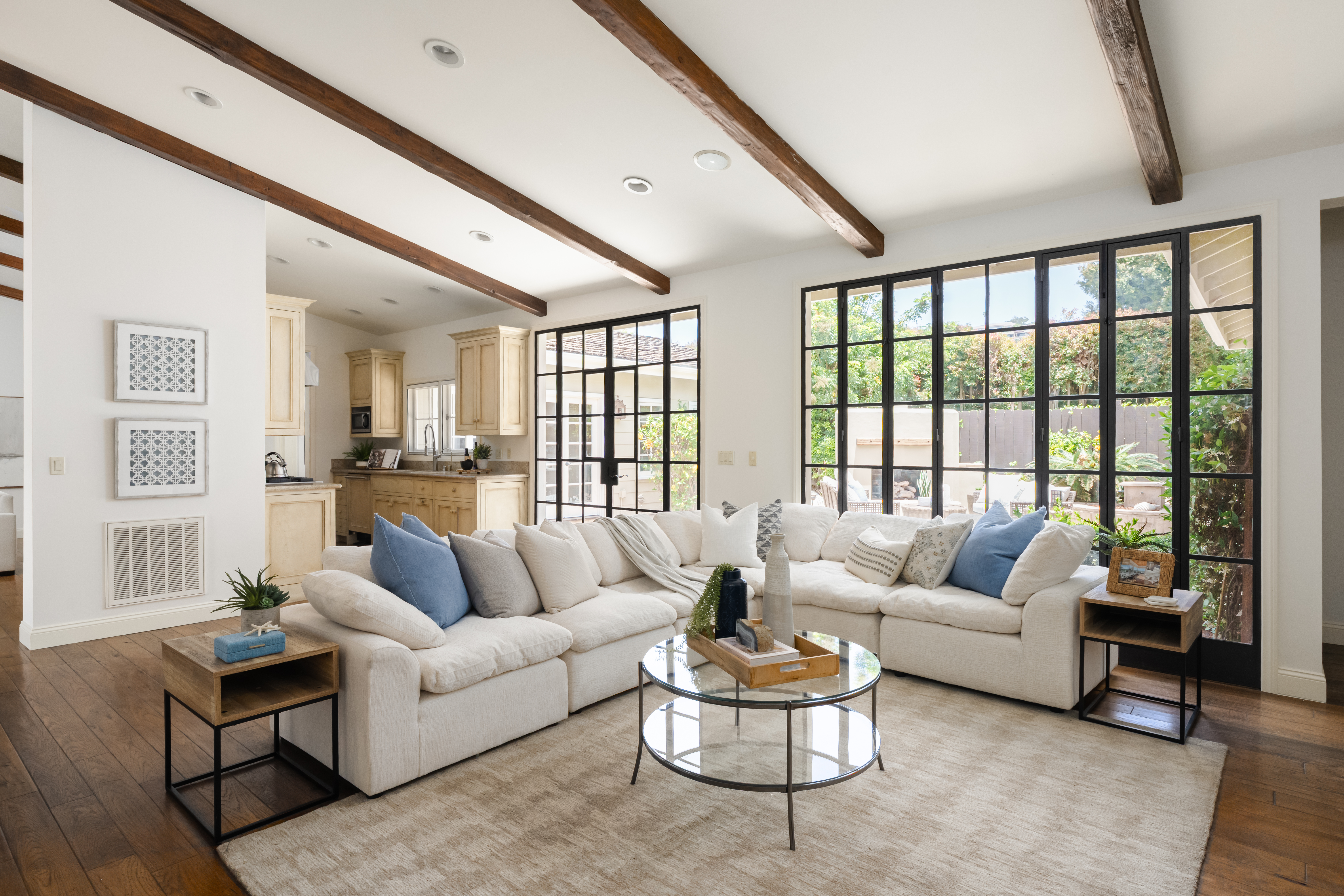
One of the most common questions we hear from San Diego sellers is also the simplest: should this home be staged vacant, or staged occupied? The answer depends entirely on your situation — but the two approaches are different enough in process, cost, and outcome that it's worth understanding both before you call a staging company.
As a designer who works both sides of this regularly, here's the honest breakdown.
“Vacant staging starts with a blank canvas. Occupied staging starts with a conversation about what stays, what goes, and what gets reimagined.”
The Short Version
| Vacant Staging | Occupied Staging |
|---|---|
| Home is empty, seller has moved out | Seller is still living in the home |
| We furnish everything from our warehouse | We work with your existing furniture, supplemented as needed |
| Instant quote available online | Individual consultation required |
| Starts at $2,800, 60-day rental included | Custom pricing, typically higher than vacant |
| Straightforward install, full design control | More nuanced — editing decisions made room by room |
Vacant Staging: The Blank Canvas
Vacant staging is exactly what it sounds like — the seller has already moved out, and the home is empty. This is the more straightforward of the two services, both for the seller and for our design team.
Because there's nothing already in the space, we have complete creative control. We select furniture, art, rugs, and accessories from our 10,000 sq ft warehouse specifically for that property, and install everything in a single day. There's no editing, no negotiating over which pieces stay — just a coordinated design executed from scratch.
This is also why vacant staging is the service we can quote instantly online. Square footage and room count are the primary cost drivers, and since we're not assessing anyone's existing belongings, the math is predictable.
Occupied Staging: Working With What's There
Occupied staging is a different discipline entirely. The seller is still living in the home — which means our job isn't to furnish a room, it's to edit, reposition, and selectively supplement a space that already has a life of its own.
This starts with an honest assessment. Our design team walks the property and identifies what's working, what's dated, what's oversized for the room, and what's simply too personal to leave in place for showings. Family photos, excess furniture, and pieces that date a room often need to come out — sometimes into temporary storage — before we bring in anything new.
Only then do we supplement with pieces from our inventory — art, accent furniture, lighting, accessories — selected to complete a cohesive story alongside what's staying.
Why Occupied Staging Costs More
This is the question we get asked most directly, so here's the direct answer: occupied staging requires more skill, more time, and more judgment than vacant staging. Assessing someone's existing furniture, making editing recommendations, and creating a design that blends old and new convincingly is simply a harder problem than furnishing an empty room from scratch.
That complexity is why occupied staging is priced individually rather than quoted instantly — every home, and every seller's existing furniture situation, is different enough that a generic price wouldn't be honest.
How to Know Which One You Need
- Already moved out, or moving out before listing? You need vacant staging. Get an instant quote based on your square footage.
- Still living in the home during the sale? You need occupied staging. Request a consultation and we'll walk you through next steps.
- Not sure yet? That's a completely normal place to start. A quick conversation with our team will make it obvious which path fits your timeline.
Whichever situation you're in, the goal is the same: a home that photographs beautifully, shows confidently, and sells for what it's actually worth.